
The Skinny on White Sands National Park
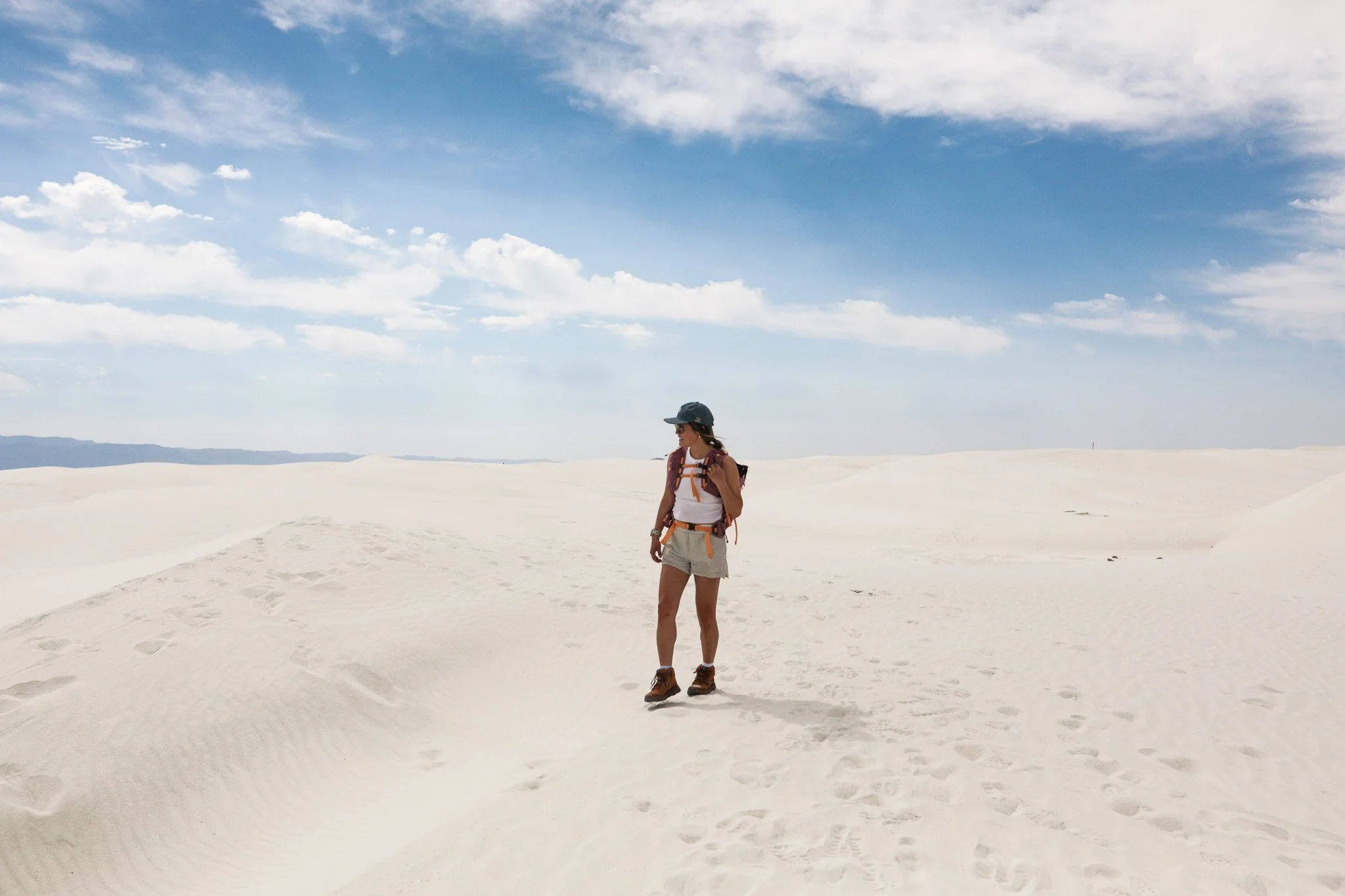
You’ve seen the photos- pure white sandy hills against a powder blue sky. White Sands National Park is unlike typical sand dunes composed of quartz. Instead, these dunes are made of gypsum crystals, giving them their brilliant white hue. These dunes formed over millennia as water from the surrounding mountains dissolved gypsum from the rocks and deposited it in the basin.
In 1933, White Sands was designated as a national monument and later became a national park in 2019. The park is bordered by military installations, including the White Sands Missile Range and Holloman Air Force Base, leading to park closures throughout the year during missile testing. If you’re planning a visit, make sure to check the park’s website for missile testing closures!
Park Activities
Scenic Drive: Dunes Drive is an 8-mile route that takes you deep into the heart of the dune field, offering numerous spots to stop and explore.
Hiking: Several trails cater to different skill levels. The Alkali Flat Trail, a 4.5-mile loop, offers a more challenging hike across the dunes, while the Interdune Boardwalk provides an accessible option with educational exhibits.
Sledding: A favorite among visitors, sledding down the soft gypsum dunes is both fun and safe. Plastic snow saucers are available for purchase at the visitor center.
Photography: The stark white dunes against the blue sky create perfect conditions for photography, especially during sunrise and sunset when the light casts dramatic shadows.

Planning Your Visit
Best Time to Visit: Fall, winter, and spring offer milder temperatures, making outdoor activities more enjoyable. Summers can be extremely hot, with temperatures reaching up to 110°F. We visited in the morning when the park first opened, left midday, and returned in the early evening once it had cooled down, for golden hour and sunset.
What to Bring: Essential items include plenty of water, sun protection (hat, sunscreen, sunglasses), comfortable walking shoes, and snacks. Be prepared for the intense sun and reflective sand, which can amplify UV exposure.
Accessibility: The park offers accessible facilities and trails, ensuring that visitors of all abilities can experience its beauty. The Interdune Boarding was closed during our visit and looks to be closed for a while longer (May/June 2025).
Getting There & Where to Stay
From Alamogordo, NM (15 miles / ~15 minutes), head west on US-70 toward Las Cruces and the park entrance is on the right (north side) of the highway.
From Las Cruces, NM (52 miles / ~1 hour), take US-70 east toward Alamogordo and the park entrance is on the left (north side) of the highway, approximately one mile past the Border Patrol checkpoint.
The nearest major airport is El Paso International Airport (ELP), which is approximately 100 miles south of the park, approximately a 1.5 hour drive. Albuquerque International Sunport (ABQ) is 222 miles away, approximately a 3.5 hours drive.
Alamogordo is approximately 15 minutes from the entrance to White Sands National Park, and has many hotels.
For those with military clearance, there is lodging in Holloman Air Force Base, which is approximately 10 minutes from the park entrance.
Las Cruces, which is just 41 miles north of the Mexican border, is approximately 52 minutes to the park entrance.